Showing posts with label ANZAC. Show all posts

Saturday, 25 April 2020

Mason sharing his conversation with his Mum about the ANZAC tunnellers

Yesterday after dinner time, I told my mum about the tunnels which were found by some college students. They were 30 metres underground and there were names, signs, graffiti and also a Kia Ora and big fern on the wall. 

These tunnels were secrete hideouts and were made by NZ soldiers who worked very hard to dig the tunnels. They also used geophones. A geophone was used by soldiers to listen for sounds from the enemy. They were placed on the ground and they could hear the faintest sounds of what the Germans were doing. 

After telling all that to my mum my mum said "Wow I didn't know that geophones were a thing". Then my mum told me everything she knows about the war.

Pitara's post about the Poppy which symbolises the ANZACs. Great work Pitara

Why are there poppies around on ANZAC
The red poppy has become a symbol of war remembrance all over the world over.
People in many countries wear the poppy to remember those who died in war or who still serve. In many countries,
the poppy is worn around Armistice
Day (11 November), but in New Zealand it is most commonly seen around Anzac Day, 25 April. 


The red or Flanders poppy has been linked with battlefield deaths since the time of the Great War (1914–18).
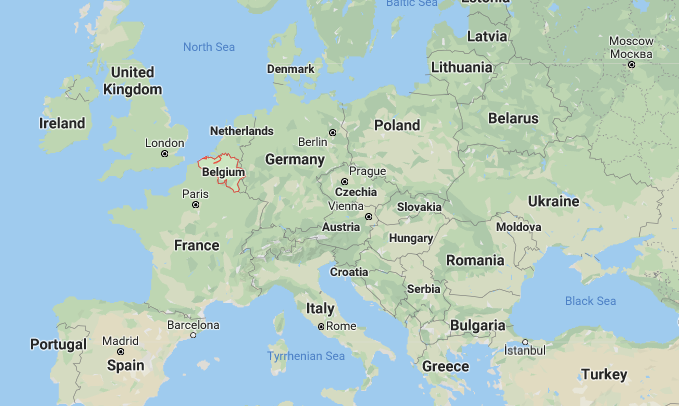
The plant was one of the first to grow and bloom in the mud and soil of Flanders in Belgium. 

The connection was made, most famously, by Lieutenant Colonel John McCrae in his poem 'In Flanders fields'. 

In Flanders fields the poppies blow
Between the crosses row on row, 
That mark our place; and in the sky 
The larks, still bravely singing, fly 
Scarce heard amid the guns below. 
We are the Dead. 

Short days ago 
We lived, felt dawn, saw sunset glow, 
Loved and were loved, 
and now we lie In Flanders fields. 
Take up our quarrel with the foe: 
To you from failing hands we throw 
The torch; 
be yours to hold it high. 

If ye break faith with us who die 
We shall not sleep, 
though poppies grow In Flanders fields. 

In New Zealand the poppy is most often worn around  Anzac Day. Since 1927 Poppy Day itself has been marked on the
Friday before Anzac Day (unless it 
falls on a Good Friday) with the appeal going through to 25 April. 

Poppies still symbolise remembrance, and New Zealanders want to show this at other times as well as on Anzac Day.
At big commemorative events, at military funerals and at war graves and cemeteries in
New Zealand and around the world, the red poppy can be seen. 

Real poppies are hard to supply in the amounts needed for a whole country, so most of the
poppies we see are the paper and plastic ones that raise funds for the RSA
(The Royal New Zealand Returned and Services Association). 
Why are there poppies around on ANZAC day?

1. During which war did they start remembering fallen soldiers with poppies? 
The war that they started remembering fallen soldiers with poppies is the Great war 1914-1918.

2. In which country is ‘Flanders?
Flanders is in Belgium.

3. Was the poet who wrote ‘In Flanders Fields’ a soldier? How do you know? 
Lieutenant Colonel John McCrae was a soldier in World War 1 and also a surgeon during the
second battle of Ypres, in Belgium.

4. In the poem it mentions a ‘quarrel’. Find a definition for the word quarrel:
Quarrel: A heated argument or disagreement, typically about a trivial issue and between people
who are usually on good term.

5. Where in the World is Belgium? Explain where you find it… 
Belgium is a country in Western Europe. It is bordered by the Netherlands to the north,
Germany to the east, Luxembourg to the southeast, France to the southwest, and the North Sea to the northwest.

6. What is an Armistice?
Armistice is an agreement made by opposing sides in a war to stop fighting for a certain time; a truce.

7. What is another name for the ‘red poppy’? Flanders Poppy.

8. How do you think John McCrae felt when he wrote his poem? I think John McCrae felt sad and heart broken
when he wrote his poem, because of the many people that sacrificed their lives during the Great War. 

9. Find an image that portrays the words of the first verse the best you can. 

     Lieutenant Colonel John McCrae, MD: In Flanders Fields
10. Why do you think the RSA want to raise money from poppies?
I think the RSA raises money from the poppies to help provide funds to support both currently serving and
ex-service men and women and their families affected by their service. I also think that the poppy is a
great symbolic icon to remind us of the sacrifices made. 

11. If you could choose another symbol to remember the ANZAC soldiers,  
     what would it be?  Explain your choice. A white cross, with a red poppy centered. I choose this simply to
signify the fallen soldiers and the poppies that grew on Flanders battlefield after the World War1.  

Extra Fact: Poppy Day has been a part of the
New Zealand calendar since 1922, making it one of the oldest nationwide appeals.

Lest we forget

Friday, 24 April 2020

Friday theme for our hangout

Every Friday, we have a theme for our hangout. Today it was Black and Red in honour of ANZAC DAY tomorrow. 

We have had a very busy week learning about the ANZACs. We feel more appreciation for soldiers and all the soldiers who continue to serve out country.

Here is a screenshot of our hangout from today. 


Lest we forget

Here is Mrs Tofa's ANZAC post for today

One of our ANZAC activities was to look at images about ANZACs and write down words which come to our minds. 

I started to collect some images about ANZAC Day and the ANZACs. I then made a short movie using the images and the words I wrote down. I also included the Last Post for the audio.

Lest we forget

Soane's symbol to remember the ANZACs

Thursday, 23 April 2020

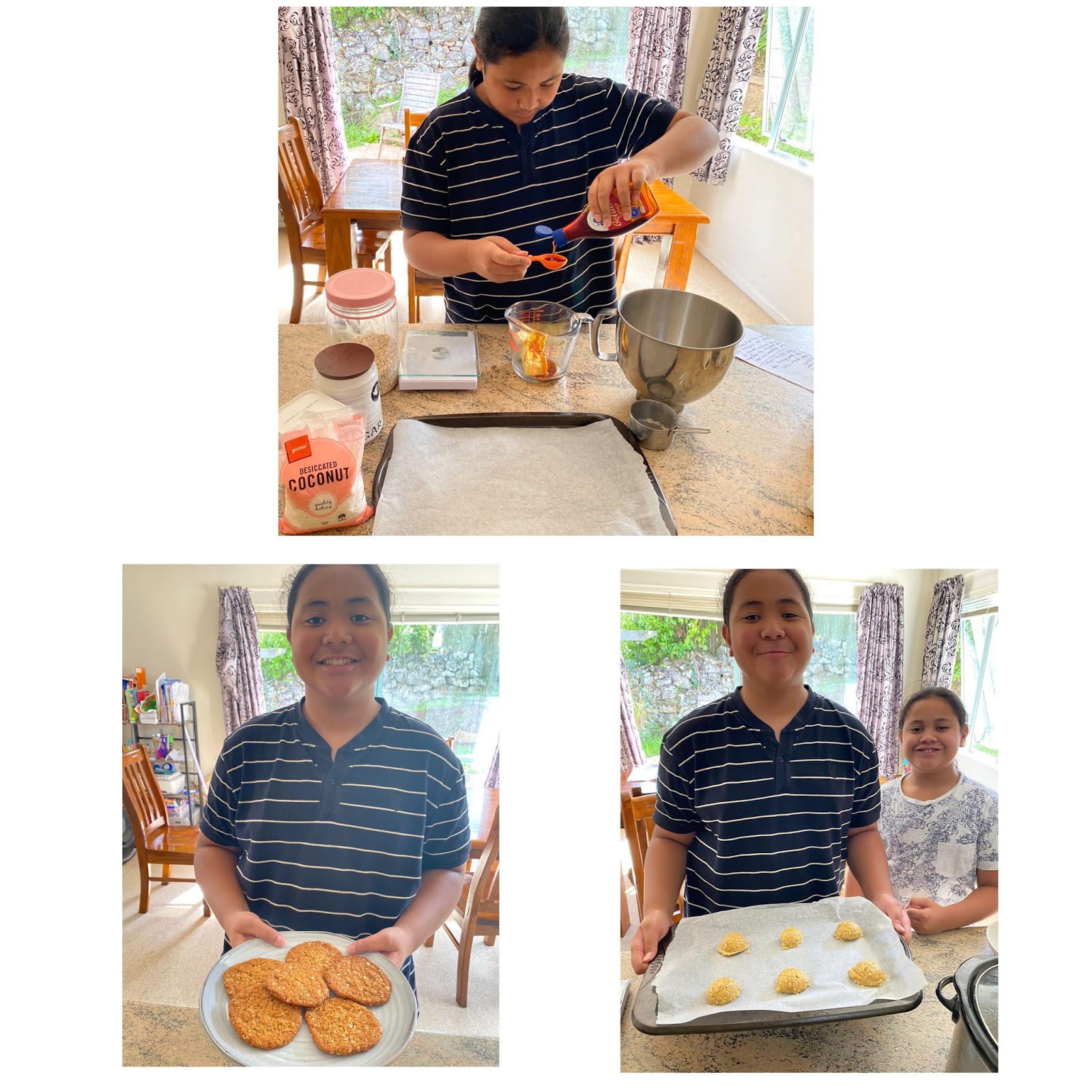
Here is a post of Ezekiel and his brother Ezra making ANZAC biscuits. Well done boys.

Today my brother and I made ANZAC biscuits

Here's The Recipe!!
  • 1 cup rolled oats
  • 1 cup Shredded coconut
  • 1 cup flour
  • 1 cup sugar
  • 125 grams butter
  • 2 Tbsp golden syrup
  • 1 tsp baking soda
  • 2 Tbsp boiling water
  • Method
    1. Preheat the oven to 180°C. Lightly grease a baking tray or line with baking
    2. Combine the oats, coconut, flour, and sugar together in a large bowl
    3. Melt the butter and golden syrup together. Dissolve the baking soda in the boiling water and add to the butter mixture. Pour the butter mixture into the dry ingredients and mix together
    4. Roll a tablespoon into balls and place on the tray, allowing room for them to spread.
    5. Bake for 12-15 minutes, cooking one tray at a time.

Mrs Tofa's ANZAC post for today

A leader - Colonel William Malone

Malone was a soldier and had seen that the world war was coming. He began to prepare by studying military history and following a fitness routine so he would be strong and fit in preparation for military service. When war was declared he volunteered immediately and because he had a good reputation as a leader he was made commander of the Wellington Infantry Battalion. He was on his way to the war with his men by October 1915. Although he placed high demands on his men, he was well respected for he also showed concern and interest in their welfare. 

There are leaders who look after people that rely on them and other leaders who don’t. After reading the paragraph (above) think about what Malone’s leadership qualities were...
Courageous 
Confident
Smart
Respectful
Caring
Leader

Who do you see as an excellent NZ leader? Look at your list for Malone – does the leader you admire have any of the same qualities? 
Jacina Ardern is a leader I admire and respect. At this time during the Covid-19 epidemic she is courageous and showing great leadership by making difficult decisions others would not be confident to make. As I watch her updates on the news and on her Facebook lives, I am amazed at her understanding of aspects of this outbreak in New Zealand and her ability to recall statistics. I also feel she is keeping the New Zealand public informed and utilising technology to communicate with New Zealand. 


Extracts from the Gallipoli Diary of Lieutenant Colonel William George Malone 
April 24th, 1915 ... I have just arranged with Home to issue to every platoon commander a phial of morphia tablets so that any wounded man can be at once given a tabloid or two to put under his tongue and thus get relief from pain. The tabloid will take from ten to fifteen minutes to dissolve and to work but it will be a great blessing to the wounded men and a great help to the nerves of their mates who will be saved quickly the hearing of the wounded men’s cries. We gave the men rice and dried apricots stewed for their tea tonight as an extra. It was an unexpected treat and very welcome. Tomorrow we give them for their last meal on board rice and stewed prunes. 
Monday, 10 May ... I am not hitting it too well with our Brigadier. He seems to resent my asking for information and for not too readily allowing my men to be plunged ahead without reconnaissance and information. 
Malone was well known for protecting his men whenever he could. This meant that sometimes he would not do what his commanders told him to do (see his diary for May 10. A Brigadier is a very senior commander and normally everyone would do exactly what he said.) 
  • Do you think that defying authority in this way is a good leadership quality? Explain your thoughts...
I have read that disobeying the orders of senior authority leaders in the military can incur very harsh consequences. I am not surprised that Malone did this to ensure his men were protected and cared for. I think one can question their leaders if the decisions are not fair or unsafe. 

Lest we forget

Aisea is proud to present his drawing using Auto Draw for his ANZAC activities


Mrs Raj used Auto Draw to do this drawing for commemorating the ANZACs. Great work Mrs Raj.


Lest we forget. Richie sharing interesting facts he read about the ANZACS

Today I read 21 facts about ANZAC day. Here are 5 facts I found interesting:

1. Did you know that all the ANZACs were volunteers

2. More than 11,000 ANZACs died at Gallipoli and more than 23,500 were wounded.

3. In Tonga, Samoa, Cook Islands and Niue, ANZAC Day is also commemorated to honour their soldiers who participated in the campaign.

4. Services are held at dawn because dawn was the best time to attack their enemy. When the sun started coming up they woke up and got ready to attack. 

5. ANZAC Day was not a public holiday in New Zealand until 1921.


LEST WE FORGET!


Miiana sharing some facts she learnt about ANZAC


This is my third activity for the ANZAC project. I read 21 ANZAC facts and in this post I am sharing three which I found interesting. This was a good activity and I learnt something new from these facts.


Wednesday, 22 April 2020

Mrs Tofa's ANZAC post for today

I read the 21 facts about ANZAC and these are the three facts I found most interesting.

1. The wearing of rosemary on ANZAC Day is done as a mark of respect for the men who never returned from Gallipoli, or indeed, later wars. The wearing of it honours the memory of those brave men.
This is an interesting fact because I did not know about this. Now when I see someone wearing rosemary on ANZAC day, I will know it is in honour of someone who did not return from wars.
Rosemary with a poppy


2. In Tonga, Samoa, Cook Islands and Niue, ANZAC Day is also commemorated to honour their soldiers who participated in the campaign.
Growing up in Samoa, my grandfather always woke up early on ANZAC day and would go to the Apia town clock where the memorial dawn service was held in Samoa. I am not sure if someone in our family went to war but my grandfather always went to the dawn services. 
Samoan Prime Minister at a dawn service on ANZAC Day


3. Anzac biscuits were created by wives of soldiers who wanted to bake healthy goodies for their men. They lacked egg and milk, so kept for a long time and didn’t spoil during transport.
I read about this in a School Journal. I am not sure if they were Kiwi women who made the biscuits or the Australian woman. Regardless, they were innovative in making biscuits which could stay fresh for a long period of time. I am sure the soldiers appreciated these biscuits. 
ANZAC biscuits

Lest we forget

Dwyane shares one of her activities for the ANZAC commemoration week challenge

Today I read a graphic novel called Harry's War by Mark Derby and illustrated by Andrew Burdan. I really enjoyed the graphic novel. I enjoyed reading graphic novels because you can the also see what
they are doing, who they are and where they are.

This story is about a man name Harry who was picked to be in the war. He had tough days while he was at the war. In the story he said he that the army treated the soldiers as if they were sheep in a pen.

What I learnt from reading this story is its very tough being in the war, soldiers train most of the days and they don't have a lot of sleep.

The army had carved a kiwi into the Chalk Hillside.


                                                            The Bulford Kiwi - The Kiwi We Left Behind | WW100 New Zealand

ANZAC commemoration week

This week Room 7 are taking on the Glenbrae School challenge to remember and commemorate the ANZACS in memory of the fallen soldiers. This is one of Richie's activities for the ANZAC commemoration challenge. Great work Richie.


I made this drawing with google drawing and it is a kiwi holding a New Zealand flag and saluting. 

Tuesday, 21 April 2020

Hangout discussion about the tunnellers who were in WW1


Men from the New Zealand Tunnelling Company were sent to France during World War 1 as part of a group to help dig the tunnels during the war. The men were mostly from the towns of Waiho or Reefton. 

We read today that the men were very tough and rough men and did not take kindly to authority. However, in a few short weeks they were trained to march, salute and take orders before leaving for France. We found this part quite intriguing.

We read the men left New Zealand on December 1915.

When the tunnelling men arrived in France, they arrived to a place called Arras. It was once a beautiful town but had been ruined by war. Other tunnelling companies were already in Arras when the Kiwis arrived. French tunnellers were digging in a place called Labyrinth and it was there that the Kiwis were set to work. 

Tunnels were needed because the Allied trench would be on one side and the German trench would be on the other side. The space in between the two trenches was called 'No man's land'. The Allies would send their soldiers over on foot trying to overtake the German territory but were shot down. Therefore, another strategy was needed to move in on the Germans and the tunnels came into the war. This was the War Underground.


 The war ended on Armistice day 11/11/1918. However, the Kiwi men did not come back to New Zealand until a few months later.  They had to stay back in France to rebuild the area where the tunnels were after the war. They arrived back in April 1919 and for a time their work in war was forgotten about. 

Today, Arras has a special visitors centre, with a lift which goes down to an underground museum in the 'Wellington' cave. The town also has a memorial for the more than 50 New Zealand tunneller who died during the war.

Lest we forget


Monday, 20 April 2020

Te Papa Museum The Scale of Our War Exhibition


Last year my family travelled to Wellington for a family wedding. One of our sight seeing activities was to visit Te Papa Museum so my sons could see the Scale of Our War Exhibition. I visited the exhibition in 2014 when my husband I travelled to Wellington for our five year wedding anniversary. 


My boys really enjoyed visiting the exhibition because the displays looked so realistic. The artefacts were made by Weta Cave who are also based in Wellington. 

Here is the website for Te Papa Museum with more information about the exhibition Te Papa Museum - The Scale of Our War


Lest we forget

Monday, 20 July 2015

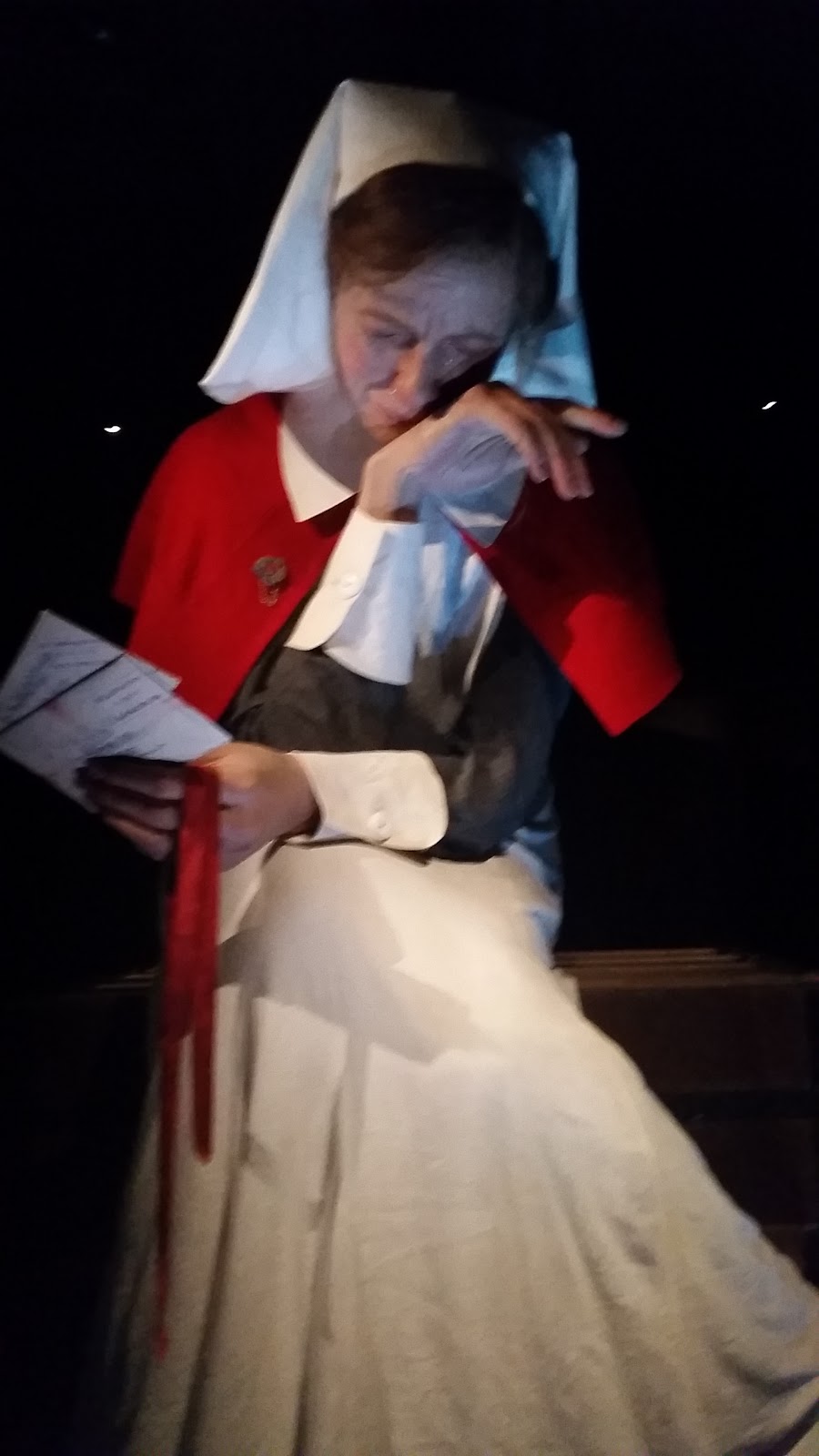
The scale of our war - ANZAC Exhibition at Te Papa Museum

In the school holidays I travelled to Wellington with my husband to celebrate our wedding anniversary. It was a lot of fun being in the capital of New Zealand. In this blog post I want to focus on one of the most moving experiences went through when I was in Wellington.
On Saturday the 12th of July my I dragged my unwilling husband back to Te Papa Museum because I wanted to see the ANZAC exhibition I had seen on Friday but did not have time to see as we had to rush somewhere else on Friday.

The name of the exhibition is The scale of our war. The queue to go inside was a long one and people lining up to go inside were of all ages and from different cultural backgrounds. One staff member stood at the front allowing people to go inside and I figured the numbered entries was to eliminate over crowding inside so everyone has enough time to view the exhibition, read the captions and also collect their thoughts and reflect on what they see. 

Finally we were through and as we entered we saw a soldier right in front of up standing about 4-5 metres. It was amazing to see such a real life looking soldier in front of our eyes and right then and there I knew this was going to be a very good exhibition. 

As we went through I could not help but wish I was walking through with my class as they have learnt so much about the ANZACS. 

I later learnt the exhibition was created by the Weta Cave company which I believed is owned by the famous Peter Jackson. I commend the staff at Weta Cave for the magnificent work which went into creating this exhibition. I have also described in the best way I can to Room 10 how special this exhibition is and urged them to consider with their parents visiting Wellington and viewing the exhibition for themselves. 


Thursday, 30 April 2015

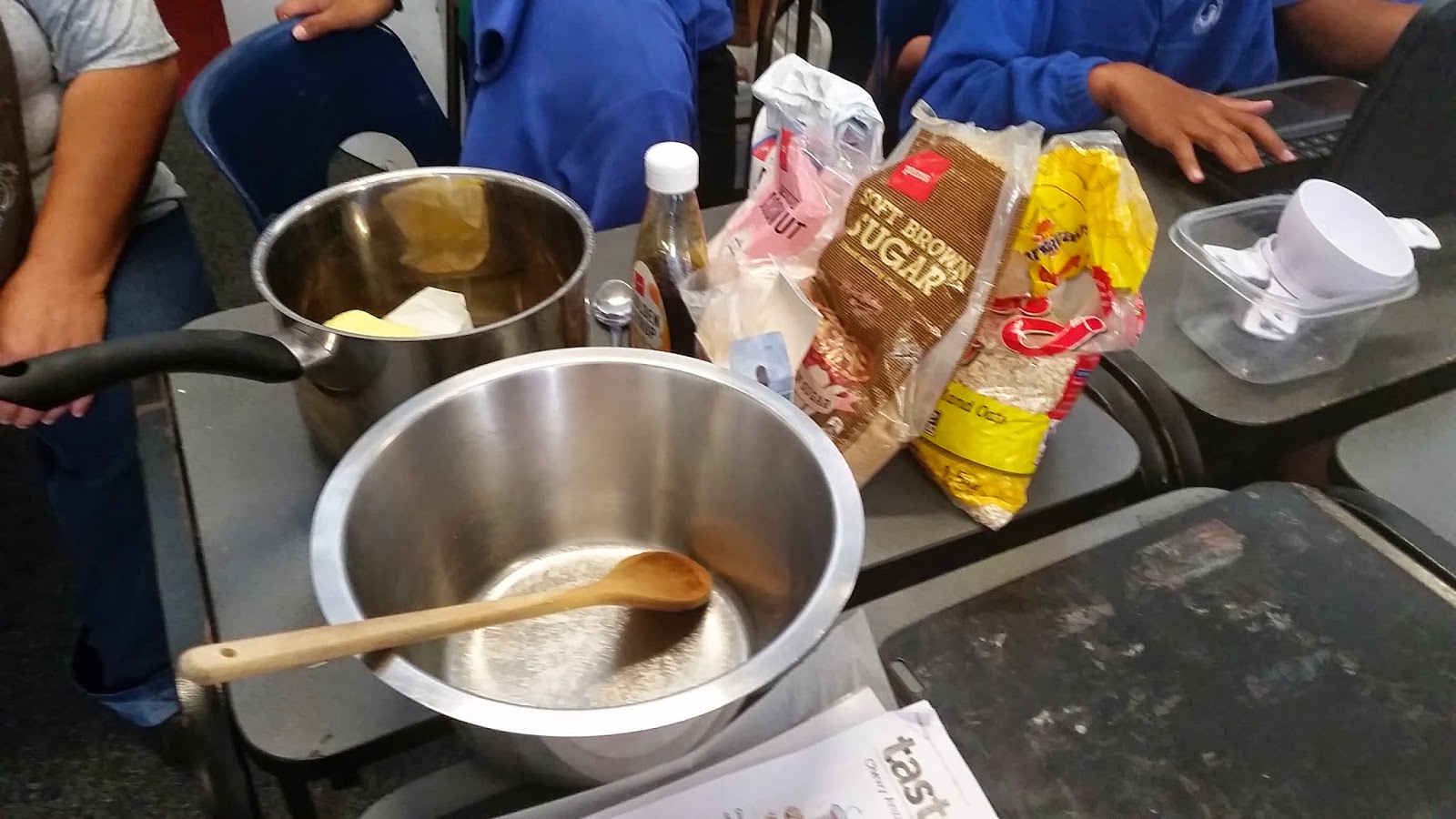
ANZAC biscuit making

Today in class we made ANZAC biscuits. They were very easy to make and were delicious. Thanks to Miss Atuahiva for helping us make the yummy biscuits.

History of ANZAC biscuits.
Some believe the wives of the soldiers made the biscuits and sent them to the soldiers in tins. However, recently researchers have found the biscuits were not eaten at war by soldiers but were sold in NZ to raise money to help with the war efforts.


Featured post

Our new blog...

Room 7 is still blogging …  but we’ve moved. Click here to visit our new blog and see the next stage of our learning journey. Comments are ...